Emahoy Tsegué-Maryam Guèbrou / Thomas Feng
Night Prayers
Second performance added on Saturday, Feb. 21 at 7 pm
Music
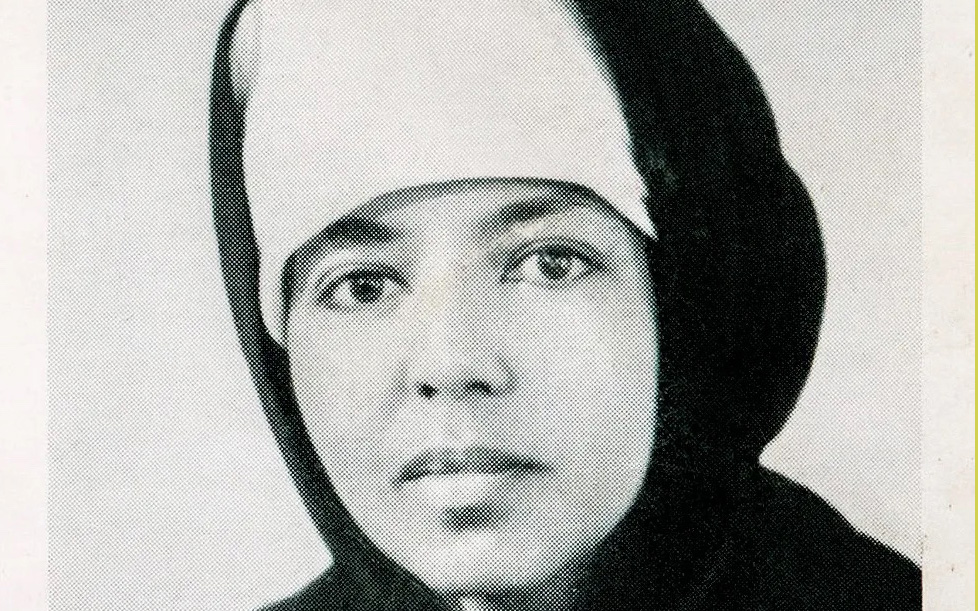
As a musician, and as a nun, Emahoy Tsegué-Maryam Guèbrou found peace in the night. At times she composed and played the piano into the early hours of the morning or woke as early as two o’clock to pray: “Everything is silent, quiet,” she explained, “so you are more close to God.”
In Night Prayers, pianist Thomas Feng performs compositions by Guèbrou alongside beloved works by Beethoven and Chopin that she kept in her room until her passing. Set amongst an immersive starscape installation by Andrew Schneider, this program conjures the rarefied stillness and spirituality of Guèbrou’s nights.
The Dark: PS21’s fearless winter festival of live performance radiating across Columbia County
The Dark is a new annual festival from PS21 : Center for Contemporary Performance that celebrates and elevates the depths of winter. Taking place February 16–22, 2026, the festival will unfold at PS21 and across Columbia County—in theatres, restaurants, libraries, saunas, and outdoor public spaces. Featuring more than 60 international artists and over 80 performances, The Dark offers a packed week of world-class contemporary performance, installation, music, dance, and theatre—all exploring winter as a time of community and solitude, fire and ice, darkness and light. A major new attraction for the region, the festival positions Columbia County as a year-round cultural destination—not just a summer one.
It is a light in the dark—and The Dark is the light.
Secure your Festival Pass to The Dark now which includes tickets to every performance along with a complimentary sauna and ice skating session!
The Storm (Emahoy Tsegué-Maryam Guèbrou)
Song of the Sea (Emahoy Tsegué-Maryam Guèbrou)
Waltz, Op. 69/1 (Frédéric Chopin)
Ballad of the Spirits (Emahoy Tsegué-Maryam Guèbrou)
Mazurka, Op. 7/2 (Frédéric Chopin)
Essay on Mahlet, the Prayer of Saint Yared (Emahoy Tsegué-Maryam Guèbrou)
Nocturne, Op. 37/2 (Frédéric Chopin)
Jerusalem (Emahoy Tsegué-Maryam Guèbrou)
Waltz, Op. 64/2 (Frédéric Chopin)
The Homeless Wanderer (Emahoy Tsegué-Maryam Guèbrou)
Evening Breeze (Emahoy Tsegué-Maryam Guèbrou)
When the waking world recedes into stillness and darkness, invisible presences draw nearer. Emahoy looked forward to her nights, to receive them. “Everything is quiet, silent,” she explained, “so you are more close to God.” She awoke as early as two or three to pray. When she lived near a piano, she would stay up even later, playing or composing. And on Orthodox feast days, she attended her favorite ritual, the mahlet, performed in church from the deepest hours of the night, until daybreak or later. The sacred hymns and dances of the cantors so transfixed her, she recalled once standing upright from midnight until four the following afternoon, without fatigue or pain.
Tonight, we imagine such a night for ourselves, through music Emahoy wrote, and music she loved. (Toward the end of her life, she kept favorite scores by Chopin, Beethoven, and Schubert in a collection with her own manuscripts, near and under her bed.) A subtle spectrum of moods and states emerges between her melodies and Chopin’s, as they illuminate, refract, and dissolve into one another – nostalgic, tragic, contemplative, ecstatic, sometimes by turn, sometimes at once. Prayer, song, and dance become one, as in Emahoy’s beloved mahlet.
The mahlet, as part of the Ethiopian Orthodox chant tradition, is in part taught and learned by night. Young boys, gathered around a teacher, repeat the sacred texts and melodies into memory, with no light to read by. Emahoy tried to learn the mahlet on her own with a reel-to-reel tape recorder and the piano, refashioning the full-throated chorus into a soliloquy for the right hand. The resulting “Essay on Mahlet” is strewn with notes to self to play plus doux, plus léger, plus dolce. Always softer, always lighter, always sweeter – the night’s abundance.
– Thomas T. Feng
Emahoy Tsegué-Maryam Guèbrou was born Yewubdar Gebru in Addis Ababa in 1923 to a privileged family and was sent to Switzerland at the age of six along with her sister Senedu Gebru. Both attended a girls’ boarding school where Yewubdar took violin lessons.
She gave her first violin recital at the age of ten and returned to Ethiopia in 1933 to continue her studies at the Empress Menen Secondary School. In 1937 young Yewubdar and her family were taken prisoners of war by the Italians and deported to the island of Asinara, north of Sardinia, and later to Mercogliano near Naples.
In the early 1960s, Emahoy lived in Gondar and immersed herself in the religious music of St Yared, composer, and father of Mahlet, the early Ethiopian religious musician. She attended the Liturgy and made extensive efforts to learn the music herself. On her daily trips to and from the church, she came across young students in Liturgy known as “yekolo temari” One day she asked why these young people sleep outdoor by the church gate. She was told they beg for food and lodging and are homeless while they pursue their education with the church. Emahoy was deeply moved by the sacrifices these young people made to study the Mahlet. “Although I did not have money to give them, I was determined to use my music to help these and other young people to get an education,” Emahoy told Alula Kebede in her interview on his Amharic radio program on the Voice of America.
Young Yewubdar secretly fled Addis Ababa at the age of 24 to enter the Gishen Mariam monastery in the Wello region where she had once before visited with her mother. She served two years in the monastery and was ordained a nun at the age of 26. She took on the title Emahoy and her name was changed to Tsege Mariam. There was no piano at Gishen, so Emahoy would travel back and forth between the monastery and Addis Ababa, playing the piano at her family’s home until deep into the night. She went on to write many compositions for the piano, organ, and her own voice.
In the early 1960s, Emahoy lived in Gondar and immersed herself in the religious music of St Yared, composer, and father of Mahlet, the early Ethiopian religious musician. She attended the Liturgy and made extensive efforts to learn the music herself. On her daily trips to and from the church, she came across young students in Liturgy known as “yekolo temari” One day she asked why these young people sleep outdoors by the church gate. She was told they beg for food and lodging and are homeless while they pursue their education with the church. Emahoy was deeply moved by the sacrifices these young people made to study the Mahlet. “Although I did not have money to give them, I was determined to use my music to help these and other young people to get an education,” Emahoy told Alula Kebede in her interview on his Amharic radio program on the Voice of America.
Emahoy’s first and second record was released in Germany in 1963 with the help of Emperor Haile Selassie. In 1972 she released two more recordings: the first raised funds for an orphanage for children of soldiers who died fighting at war, founded by her sister, Desta Gebru; the second raised money for the Ethiopian church in Jerusalem. In keeping with this tradition, EMF gives disadvantaged children access to music lessons. Emahoy Tsege Mariam Gebru donated her previously published and unpublished music for the use of the EMF to raise funds for grants and scholarships.
Emahoy left Ethiopia following her mother’s death in 1984 and fled to Jerusalem, Israel because socialist doctrine in Ethiopia during the reign of dictator Mengistu Haile Mariam attacked her religious beliefs. Emahoy’s most popular collection of songs, Ethiopiques 21, was released in 2006, and in 2008 she played a rare concert in DC to benefit the newly-founded Emahoy Tsege Mariam Music Foundation. In 2013, Jerusalem Season of Culture hosted concernts in commemoration of Emahoy’s 90th birthday. She passed away in 2023 at the age of 99. Recordings of Emahoy’s compositions are still being published, and her legacy endures through the work of the Foundation. Around the world her story and music continues to be discovered and celebrated.
Thomas T. Feng is a pianist, composer, and music scholar.
As a pianist, he performs principally works of modern and contemporary literature, including new works by living composers and several works of his own. Notable engagements include premieres of solo works by Eve Beglarian, Salina Fisher, Reiko Füting, James Newton, Kurt Rohde, Nicky Sohn, Tui St. George Tucker, and Sam Wu; ensemble performances with Da Capo Chamber Players and Wild Up; and appearances at the Kennedy Center, Monday Evening Concerts (Los Angeles), TIME:SPANS (NYC), and Brooklyn Folk Festival.
His own lyrical and introspective compositions are often concerned with elaborating or deconstructing the music of others. Though mostly written for himself to play, several of his works have also been performed by richi valitutto, Verdant Vibes, Wild Up, Palo Alto Chamber Orchestra, and the Orlando Philharmonic Orchestra. An album of original solo piano music, titled i am a tricky pear, and a “quarantine album” we have music at home, are available on Bandcamp.
Principal research interests include piano music after 1900, modernism in intercultural/global contexts, and music notation and archival media. His archival research, transcriptions, and critical editions have enabled new performances of rarely-heard works by Laurie Spiegel, Julius Eastman, Diamanda Galás, Maryanne Amacher, and Emahoy Tsege-Mariam Gebru, and have been published by Wise Music Classical and Emahoy Music Publisher. His scholarship on the life and music of Emahoy Tsege-Mariam Gebru, has been referenced in The New Yorker, Pitchfork, and Songlines; an excerpt of his dissertation on the subject is forthcoming in an edited volume with Oxford University Press.
Thomas holds a DMA in Performance Practice from Cornell University, an MM in Contemporary Performance from the Manhattan School of Music, and a BA in Music Composition, summa cum laude, from UCLA. His teachers include Xak Bjerken, Andrew Zhou, Margaret Kampmeier, Christopher Oldfather, Anthony de Mare, Mark Carlson, Sean Friar, Gloria Cheng, David Conte, and Claude Monteux.
All compositions by Emahoy Tsege-Mariam Gebru copyrighted by the Emahoy Tsege-Mariam Music Foundation and Publisher.
The Dark is supported through a Market New York grant, awarded to PS21 : Center for Contemporary Performance from Empire State Development and I LOVE NY, New York State’s Division of Tourism.
Digital content coverage for The Dark is supported by Bloomberg Connects.
The Dark‘s business sponsors are Millay Arts and The Mountains Media.
Thank you to the many generous individual supporters who helped fund The Dark.
PS21’s programs are made possible in part with support from the New York State Council on the Arts with the support of the Office of the Governor and the New York State Legislature.
Please note that this performance has an unconventional seating, limited seats or standing room only. We are happy to accommodate any specific accessibility needs.
Please reach out to Adriana at boxoffice@ps21chatham.org, and she will coordinate with our front-of-house team to ensure your experience is comfortable and enjoyable.