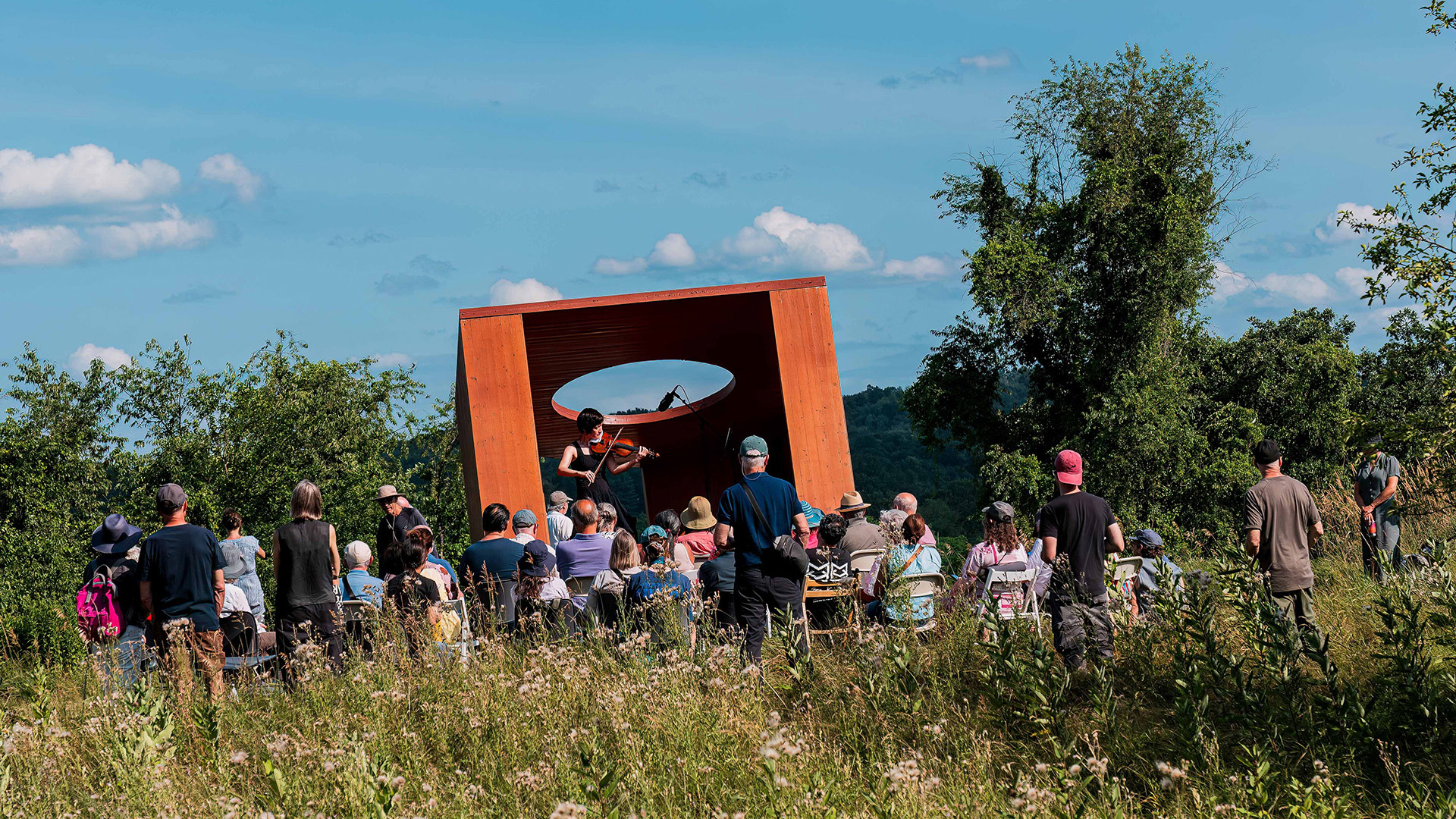
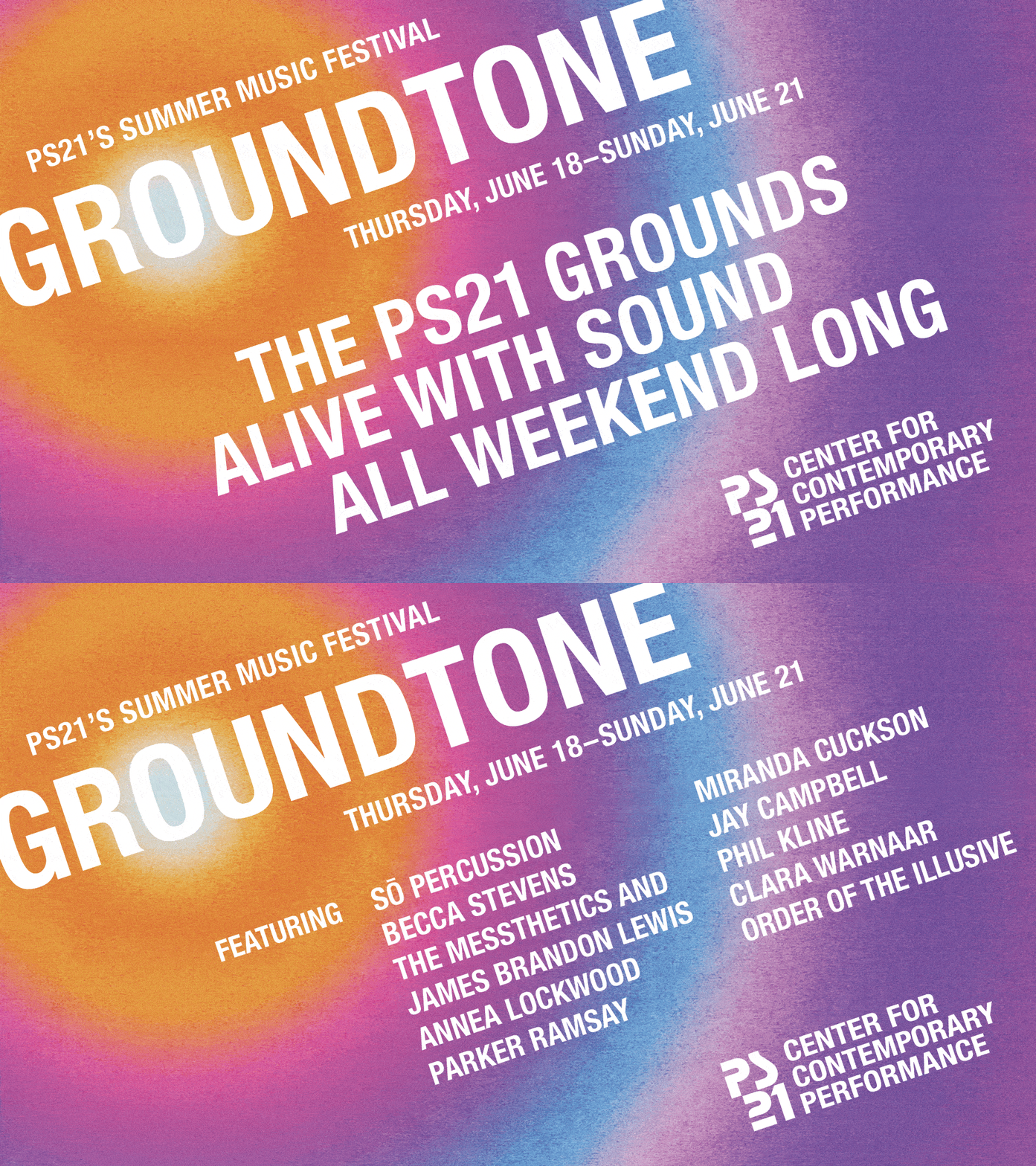
The PS21 grounds are alive with sound.
Groundtone is PS21’s weekend-long celebration of adventurous music, featuring virtuosic artists, audacious new sounds, and fresh collaborations. With immersive performances in the round and across the landscape, Groundtone is four packed days of exciting new music and community.
This year’s Groundtone features Sō Percussion in collaboration with Grammy-nominated songwriter Becca Stevens, jazz-punk heavyweights The Messthetics with James Brandon Lewis, trailblazing harpist Parker Ramsay, and a full slate of boundary defying artists.
The weekend marks the public launch of Annea Lockwood’s Home Ground—a new site specific work acoustically mapping the PS21 terrain.
On the final day of Groundtone, PS21 brings the globally-renowned Make Music Day to Chatham for the first time—opening with the world premiere of a participatory sunrise musical procession created by Phil Kline.
Food from Our Daily Bread will be available in the PS21 cafe all weekend (Thursday—Saturday 3:30—late, plus Sunday morning) and Stonykill Coffee & Records will be selling coffee and records on Friday and Saturday.
Get your tickets below.
SCHEDULE
Thursday, June 18
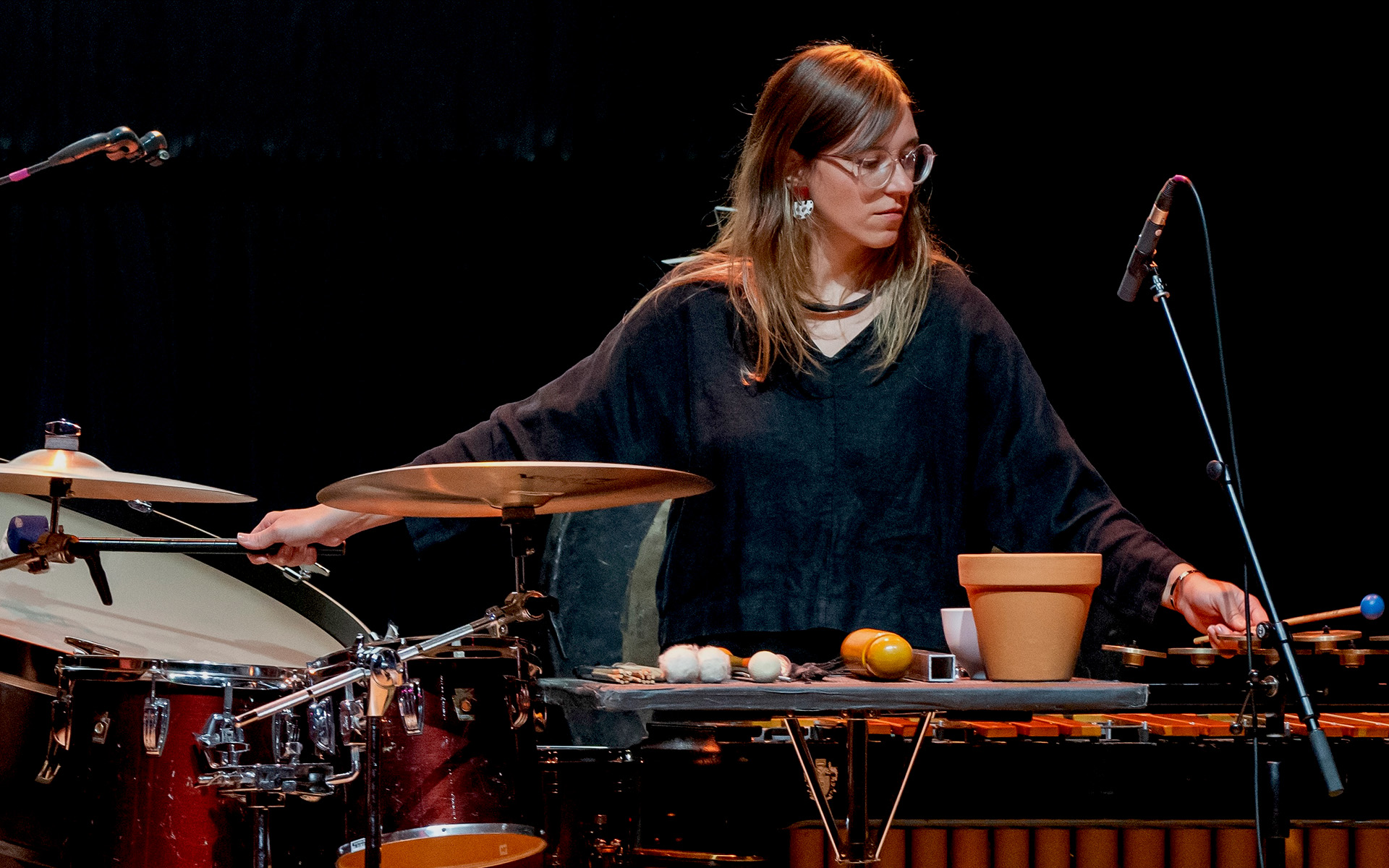
4:30 pm – Clara Warnaar, Pulse Atlas, a vivid percussion program with works featuring marimba, vibraphone, and mixed percussion.
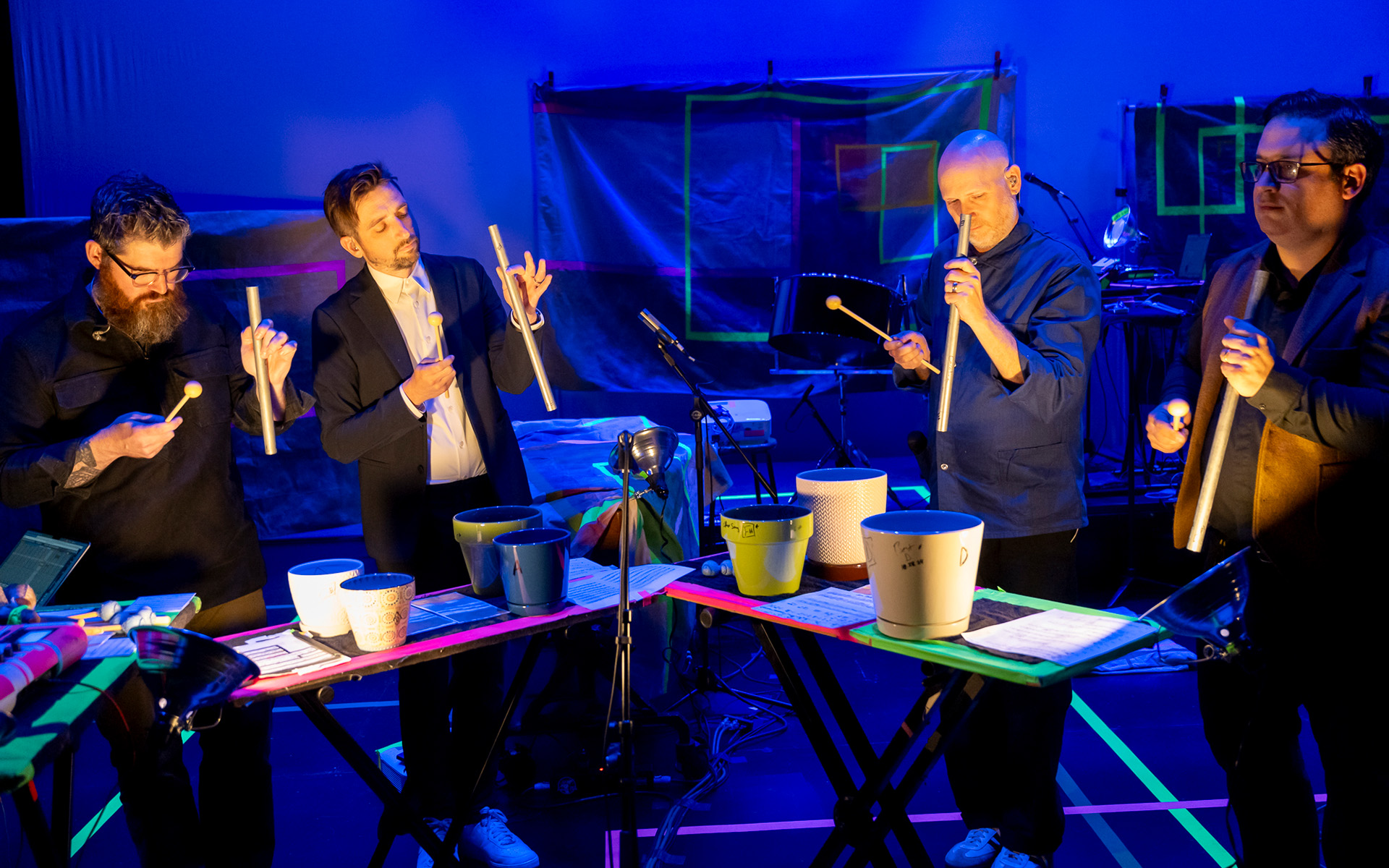
7:30 pm – Sō Percussion with Becca Stevens, Grammy-winning percussion quartet are joined by songwriter and multi-instrumentalist, Becca Stevens
Friday, June 19
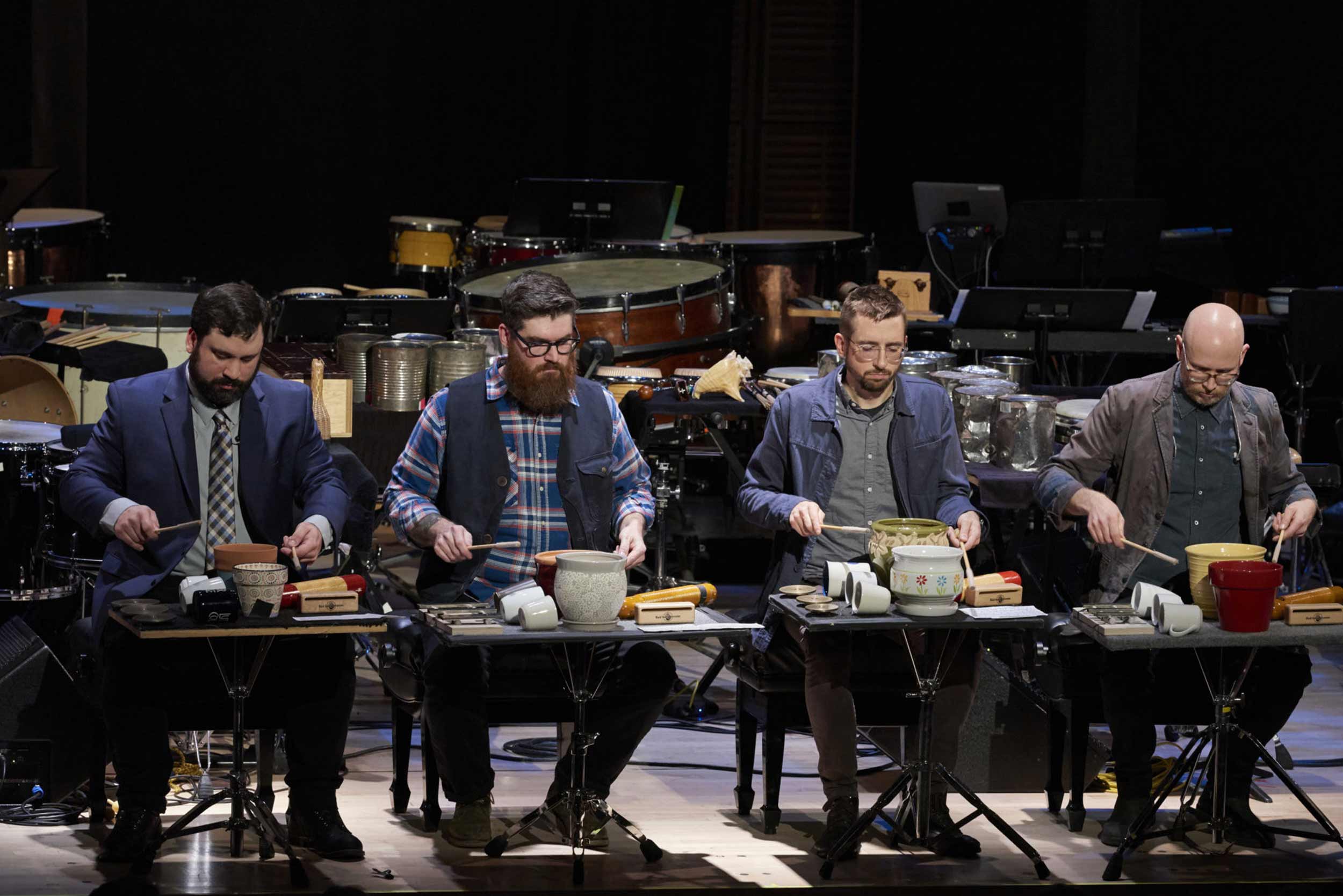
4:30 pm – Sō Percussion performs Steve Reich, staged outdoors at Solo Pavilion, overlooking the beautiful PS21 fields
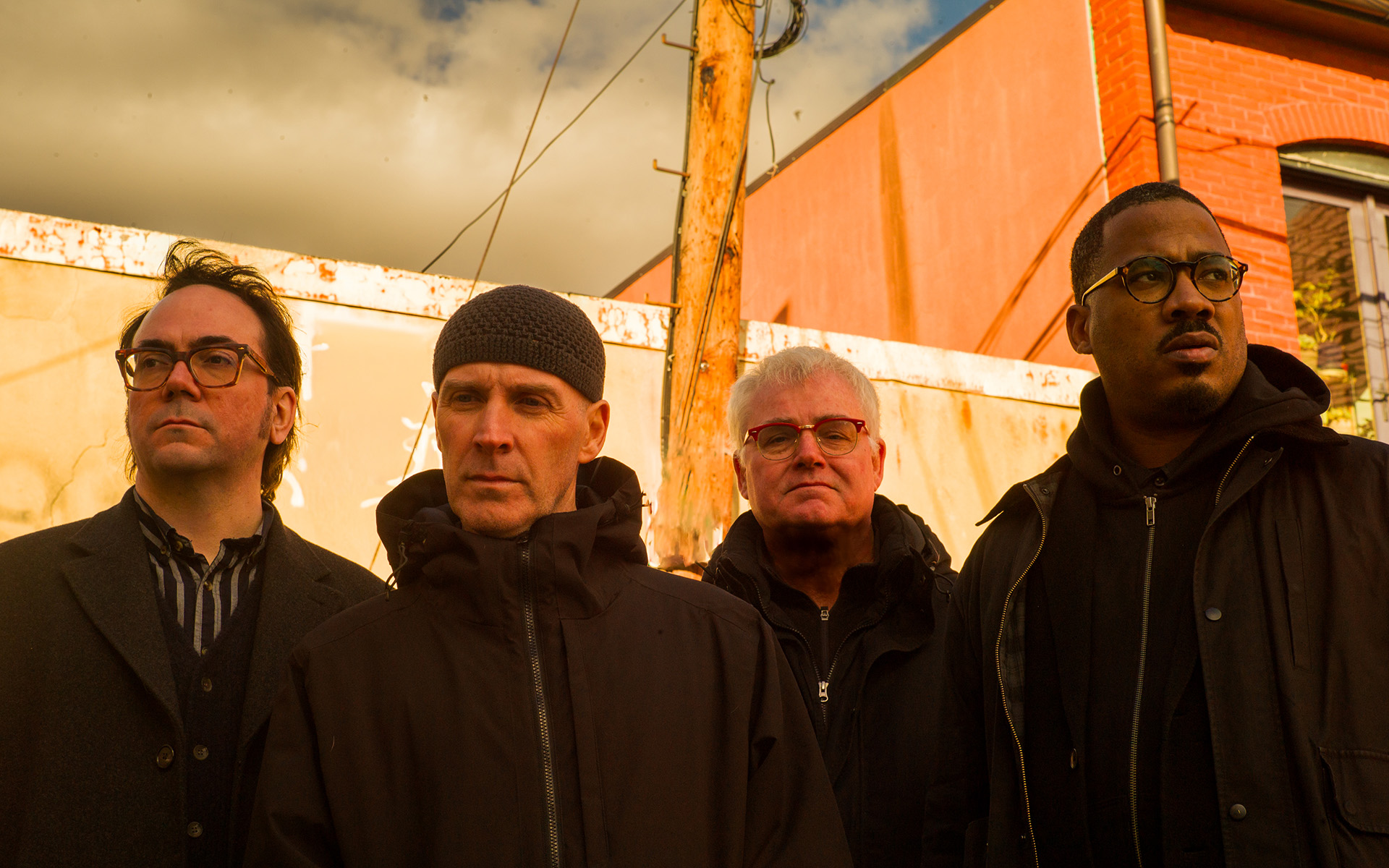
7:30 pm – The Messthetics and James Brandon Lewis, a fusion trio featuring the rhythm section of post-punk band Fugazi joined by jazz saxophone giant James Brandon Lewis
Saturday, June 20
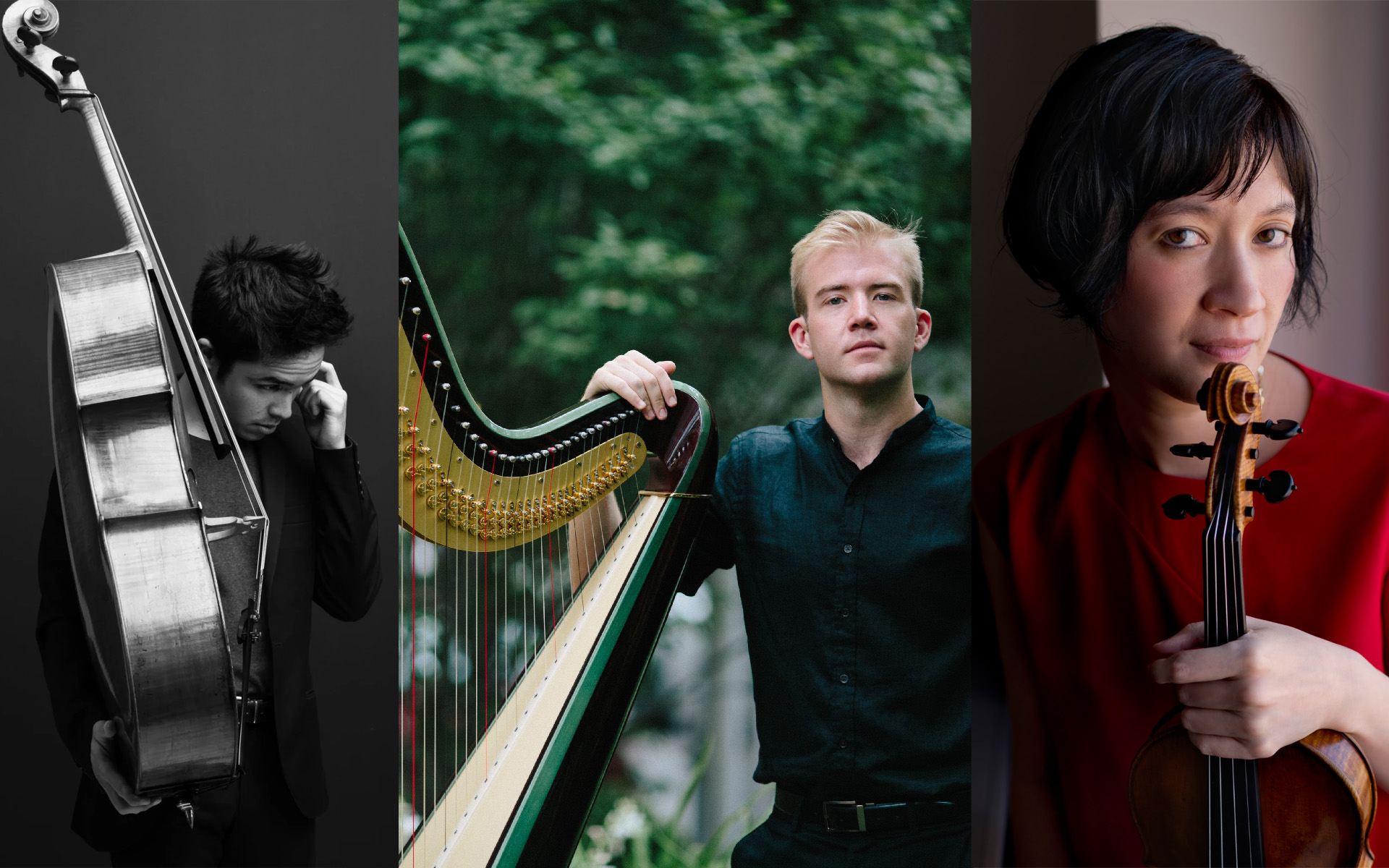
4:30 pm – Parker Ramsay, Miranda Cuckson, and Jay Campbell, afternoon concert of harp, violin, and cello featuring pieces by Haas and Trapani
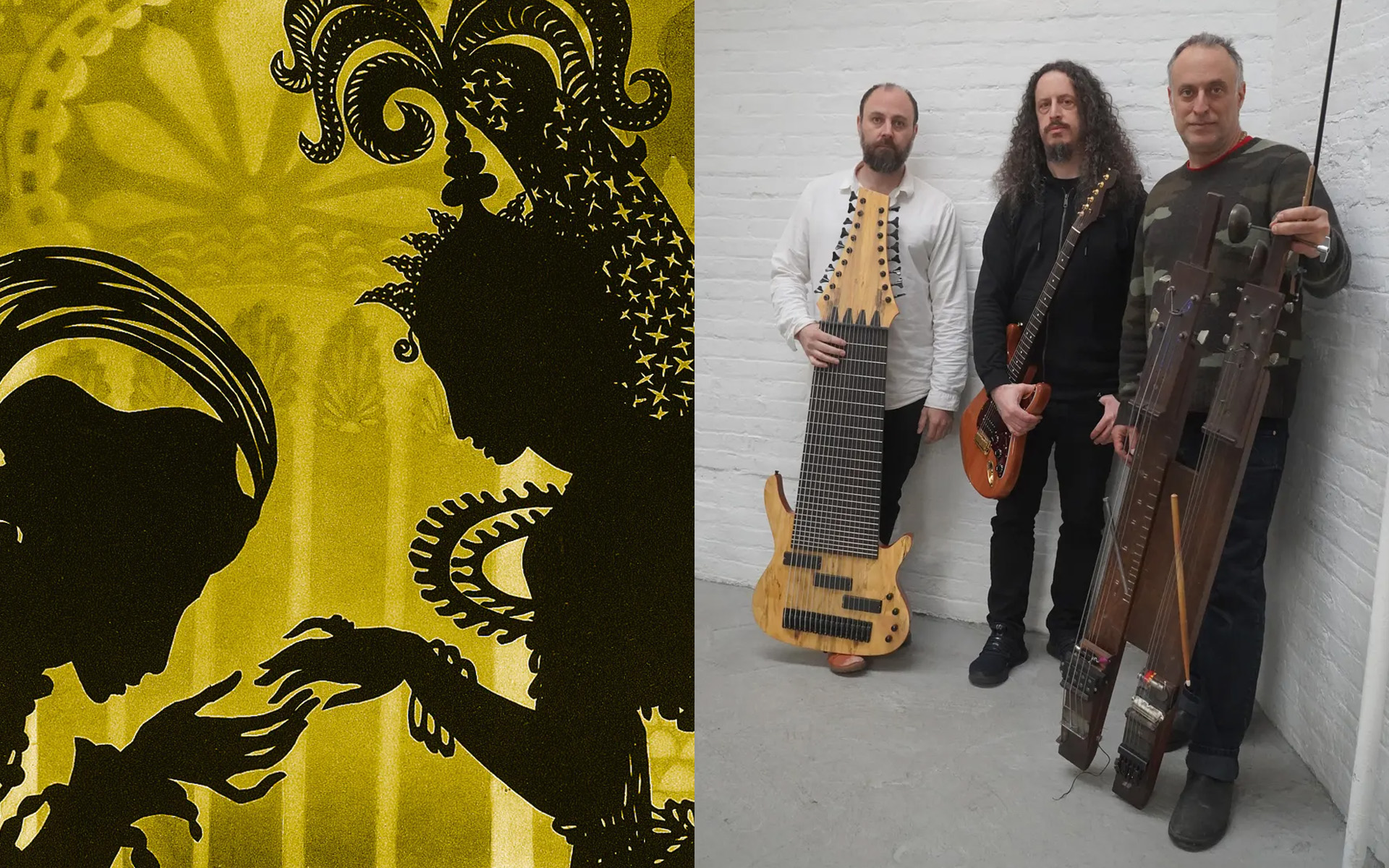
7:30 pm – Order of The Illusive, film screening with live score by Geoff Gersh (guitar and electronics), Bradford Reed (drums and pencilina, an instrument of his own design), and Zach Layton (17 string bass and effects)
Sunday, June 21
5:00 am – Phil Kline: Force of Nature (June), a sunrise processional performance on the summer solstice
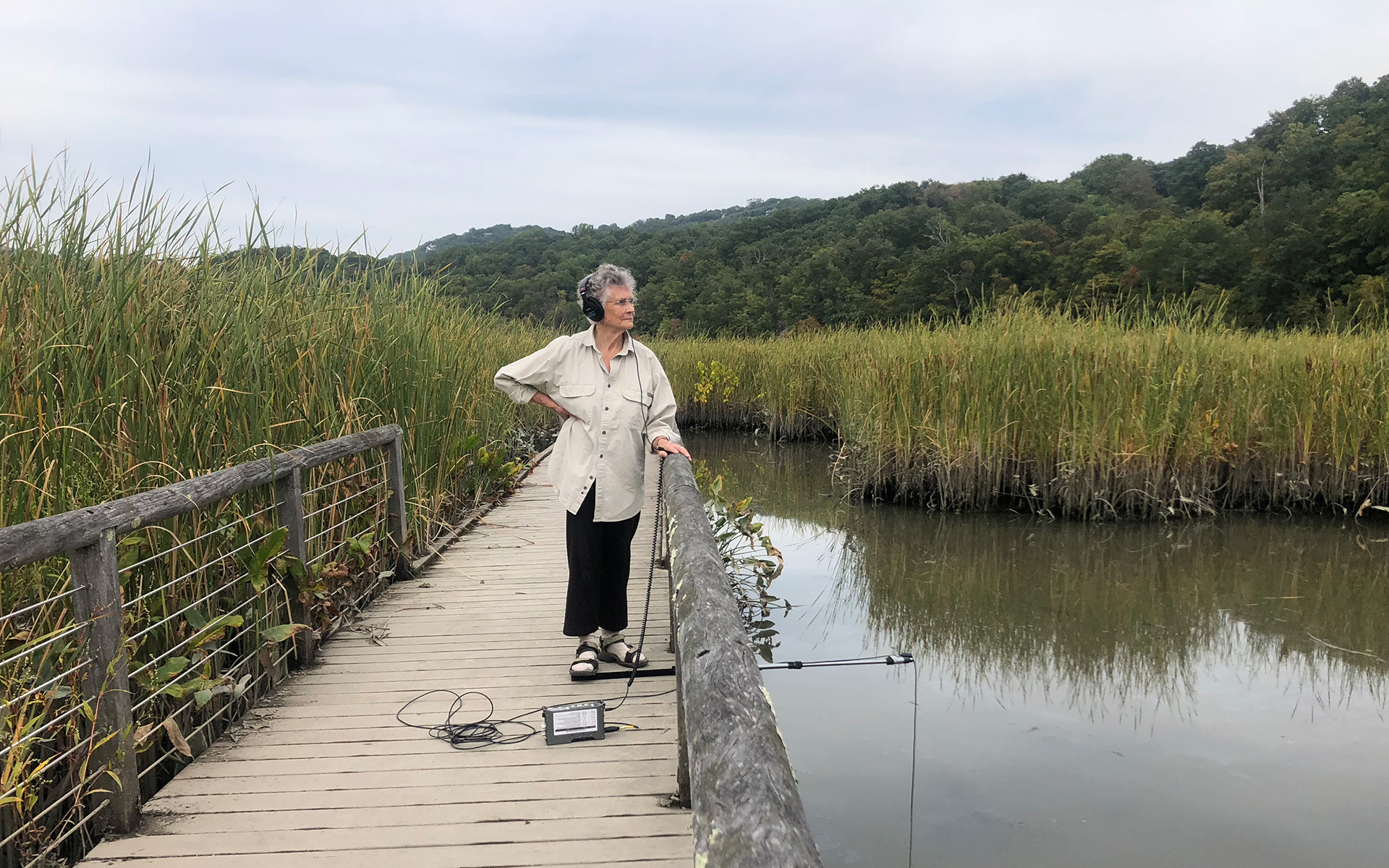
10:00 am – Annea Lockwood’s Home Ground, a new site-specific project creating an acoustical map of PS21, walk led by Annea
PERFORMANCES & EVENTS
PROGRAM INFORMATION
Clara Warnaar
Pulse Atlas
About the program:
Featuring four hypnotic works, “Pulse Atlas” showcases music for marimba, vibraphone, and mixed percussion by current-day composers J. Andrés Ballesteros, Alejandro Viñao, and Michio Kitazume.
Percussionist Clara Warnaar, a member of the International Contemporary Ensemble – hailed as “the new gold standard for new music” by The New Yorker – kicks off PS21’s second annual Groundtone Weekend with this vivid solo program.
Some of the pieces on this afternoon’s program travel through landscapes and memories, while others embark on abstract journeys of sound, all propelled by the grounding sound of percussion. An esteemed composer as well as performer, Clara concludes the program with the premiere of her new work, Hakone Suite, performed with percussionist Robby Bowen for two vibraphones and electronics.
Program:
Program:
J. Andrés Ballesteros: Sri Lanka Silhouettes (2025)
for vibraphone
Prelude
Galle Face Kites
Morning Mist at Horton Plains
Madu Ganga Mangrove
Distant Herds at Minneriya
Postlude
Alejandro Viñao: Khan Variations (2001)
for marimba
Michio Kitazume: Side by Side (1989)
for 6 drums and kick drum
Clara Warnaar: Hakone Suite (2026)
for two vibraphones and electronics
with Robby Bowen
Run time: 45 minutes, no intermission
Clara Warnaar is a percussionist, composer, and educator. A member of the long-running International Contemporary Ensemble, Clara finds herself in the heart of new music-making, playing and producing. Ms. Warnaar has also appeared as a guest artist with renowned groups such as Yarn/Wire, the Bang on a Can All-Stars, and Ensemble Signal. Her deep interest in new music is evident in her consistent premiering of new works by emerging and interdisciplinary artists, as well as her collaborations with acclaimed composers such as Ted Hearne, Missy Mazzoli, Courtney Bryan, Felipe Lara, Ellen Reid, Ash Fure and Steve Reich.
Her versatility extends beyond the concert hall—Clara has appeared on Broadway in Into the Woods and can be heard on film soundtracks including White Noise, The Fate of the Furious, and Teenage Mutant Ninja Turtles. Originally from Los Angeles, Ms. Warnaar is based in New York City and Ithaca, where she is serving as Visiting Assistant Professor at Ithaca College (2025–2026).
As a creative music-maker, Clara has released two solo albums of her own music, and performed and recorded as a drummer with Infinity Shred. Her work includes percussion compositions that span experimental and traditional approaches. She also curates A New Age for New Age, a compilation series reimagining the genre, which has grown across seven volumes and featured over 70 artists.
Performers:
Clara Warnaar, solo percussion
Robby Bowen, percussion
Composer bio’s:
Andrés Ballesteros is a Boston-based composer, teaching artist, and administrator whose work chases threads of curiosity and social justice. His compositions, praised for their “versatility of style and memorable hooks” (Boston Musical Intelligencer), blend classical music with diverse genres, narrative arcs, and a collaborative approach. Though he currently lives in Boston, he has roots and family in North Carolina, Mexico, and Texas.
Andrés and I met in 2025, initially over Zoom, as he began writing this vibraphone solo for me, titled “Sri Lanka Silhouettes”. Andrés has a very generous spirit and curiosity about sounds, which I immediately appreciated. He says this about the piece, “Sri Lanka Silhouettes is a series of musical ‘postcards,’ brief moments in sound inspired by several places across the island nation, drawing on photographs I took during a trip to visit my friend Eboni White, who was living there at the time; these are included as a visual reference point.” I find the prelude and postlude to be so mesmerizing, as if they could hypnotize the listener and the performer to be able to travel to far away places without leaving their seat.
Alejandro Viñao (born 4 September 1951 in Buenos Aires) is a composer who blends contemporary classical music with Latin American rhythms, electronic techniques, and influences from diverse musical traditions. His works are known for their rhythmic energy and inventive use of timbre and texture.
I first discovered Alejandro’s piece “Khan Variations” in 2010 when I started slowly learning the complex marimba solo, with a first performance in 2011, while I was at the Manhattan School of Music. The piece is structured as an uninterrupted set of 8 rhythmic variations, inspired by the vocal style of Pakistani-singer Ali Khan. It’s considered one of the more challenging works in the marimba repertoire, both from a technical and musical point of view, but a challenge that has always felt deeply rewarding for my style of performance. I hope you enjoy listening to each variation as it vacillates in complexity, as a kaleidoscope or unfolding puzzle.
Michio Kitazume (born 12 February 1948 in Tokyo) is a Japanese composer and conductor whose music is noted for its refined timbral writing, intricate sound textures, and inspiration from natural phenomena. His output spans orchestral, chamber, choral, electronic, and wind ensemble works, often exploring subtle sonic transformations and spatially conceived musical structures.
Michio’s work for solo percussion, “Side by Side” features bongos, congas, toms and a kick drum in descending pitch order. This piece mirrors the previous piece in some ways: there is a pleasure to hearing the musical themes evolve, devolve and build again. Creating hills and valleys of rhythmic explorations. Michio manages to create these gradual evolutions in an organic and intuitive way, while keeping a grounded sound with the set of 7 drums.
And finally, some notes on my newest composition: “Hakone Suite.” The seed idea for this piece was planted during a solo trip to the Hakone mountain region in Japan, a couple hours outside of Tokyo. Inspired by Japanese minimalism, as well as ambient music giants like Brian Eno, the piece is slow moving and calm, with underlying mysteries evoked in the electronic play-back that accompanies the 1st and 2nd movements. The piece follows the pacing of a bus or train ride, with discoveries being made gradually along the way. The book “Ambient Media, Japanese Atmospheres of Self” by Paul Roquet informed the writing of this piece. The book researches ambient media of all genres and “what it means to use media as a resource for personal mood regulation”. Thank you to Robby Bowen for joining me with his calm contribution to this piece!
Sō Percussion with Becca Stevens
Known for their “exhilarating blend of precision and anarchy, rigor and bedlam” (The New Yorker) and their “mix of consummate skill and quirky charm” (New York Times), Grammy-winning percussion quartet Sō Percussion kicks off PS21’s second annual Groundtone weekend. In this special concert, they’ll team up with Grammy-nominated songwriter, multi-instrumentalist, and producer Becca Stevens.
Program:
Eric Cha-Beach: 4+9 (2025)
Bryce Dessner: Music for Wood and Strings (2015)
INTERMISSION
Caroline Shaw: Narrow Sea (2021)
I. I am a poor wayfaring stranger
II. Sweet fields beyond the swelling flood
III. Sweet rivers lie just before
IV. On Jordan’s stormy banks I stand
V. She said she’d meet me when I come
Run time: 80 minutes, with intermission
Becca Stevens + Sō Percussion: Songs
Performers:
Eric Cha-Beach
Josh Quillen
Adam Sliwniski
Jason Treuting
Becca Stevens, vocals
About the artists:
For 25 years and counting, Grammy-winning percussion quartet Sō Percussion has redefined chamber music for the 21st century through an “exhilarating blend of precision and anarchy, rigor and bedlam” (The New Yorker). They are celebrated by audiences and presenters for a dazzling range of work: for live performances in which “telepathic powers of communication” (The New York Times) bring to life the vibrant percussion repertoire; for an extravagant array of collaborations in classical music, pop, indie rock, contemporary dance, and theater; and for their work in education and community-building, seeking to explore the immense possibility of art in our time.
Rooted in the belief that music is an elemental form of human communication, and galvanized by forces for social change, Sō enthusiastically pursues a range of social and community outreach through their nonprofit umbrella, including an ongoing partnership with Pan in Motion; the Sō Laboratories concert series; a studio residency program in Brooklyn; and the Sō Percussion Summer Institute, an intensive two-week chamber music seminar for percussionists and composers they have led annually since 2009. The members of Sō Percussion are the Edward T. Cone Performers-in-Residence at Princeton University – a role they’ve held for more than a decade.
Sō Percussion is Jason Treuting, Adam Sliwinski, Josh Quillen, and Eric Cha-Beach.
Twice GRAMMY-nominated singer/songwriter Becca Stevens has forged a unique career, blending pop, jazz, indie-rock, folk, and world music with her classical and Appalachian roots. Known for her versatile vocals and mastery of multiple string instruments, Stevens’ work transcends genres through intricate rhythms and harmonies.
Since founding the Becca Stevens Band in 2006, she has toured internationally and become a sought-after collaborator, working with David Crosby, Jacob Collier, Michael League of Snarky Puppy, and Taylor Eigsti. She’s also partnered with the Secret Trio and Attacca Quartet, earning a 2023 GRAMMY nomination with violist Nathan Schram. Her collaborations extend further, with artists like Brad Mehldau, Chris Thile, Laura Mvula, Michael McDonald, Antonio Sánchez, Gretchen Parlato, and Ambrose Akinmusire.
Sō Percussion performs Steve Reich
Sō Percussion returns to Groundtone for a second day, this time to present a free program of Steve Reich, staged outdoors in the PS21 fields. The Grammy-winning ensemble will deliver masterfully nuanced and personal renditions of the minimalist composer’s percussion repertoire.
Program:
Steve Reich: Music for Pieces of Wood (1973)
Steve Reich: Four Organs (1970)
Steve Reich: Drumming, Part 1 (1971)
Run time: 45 minutes, no intermission
Performers:
Eric Cha-Beach
Josh Quillen
Adam Sliwinski
Jason Treuting
About the artists:
For 25 years and counting, Grammy-winning percussion quartet Sō Percussion has redefined chamber music for the 21st century through an “exhilarating blend of precision and anarchy, rigor and bedlam” (The New Yorker). They are celebrated by audiences and presenters for a dazzling range of work: for live performances in which “telepathic powers of communication” (The New York Times) bring to life the vibrant percussion repertoire; for an extravagant array of collaborations in classical music, pop, indie rock, contemporary dance, and theater; and for their work in education and community-building, seeking to explore the immense possibility of art in our time.
Rooted in the belief that music is an elemental form of human communication, and galvanized by forces for social change, Sō enthusiastically pursues a range of social and community outreach through their nonprofit umbrella, including an ongoing partnership with Pan in Motion; the Sō Laboratories concert series; a studio residency program in Brooklyn; and the Sō Percussion Summer Institute, an intensive two-week chamber music seminar for percussionists and composers they have led annually since 2009. The members of Sō Percussion are the Edward T. Cone Performers-in-Residence at Princeton University – a role they’ve held for more than a decade.
Sō Percussion is Jason Treuting, Adam Sliwinski, Josh Quillen, and Eric Cha-Beach.
The Messthetics and James Brandon Lewis
Deface the Currency
About program:
Deface the Currency, the new second collaborative album from the Messthetics and James Brandon Lewis, grew out of a simple intuition. The group — with saxophonist Lewis joining the core Messthetics lineup of Brendan Canty on drums, Joe Lally on bass and Anthony Pirog on guitar — was on tour in the summer of 2025 when Canty knew it was time to go back into the studio.
This configuration of the band had debuted on record the year prior, releasing an acclaimed self-titled album via Impulse!, the legendary jazz label. But as the quartet logged serious time on the road, the drummer felt their chemistry evolving, so he called up engineer Don Godwin and booked a couple of days at Tonal Park in Takoma Park, Maryland, where The Messthetics and James Brandon Lewis was recorded.
Run time: 75-90 minutes, no intermission
Performers:
Brendan Canty – Drums
Joe Lally – Bass
Anthony Pirog – Guitar
James Brandon Lewis – Saxophone
About the artists:
The Messthetics formed in 2016 in Washington, D.C., drawn together by mutual admiration: Pirog had grown up listening to Fugazi, the era-defining post-hardcore band anchored by the rhythm section of Lally and Canty, while the bassist and drummer heard the genre-spanning guitar visionary play around town and took note of his unusually inclusive aesthetic. Pirog had played and bonded with Lewis before the Messthetics formed, and in 2019, he invited the saxophonist — whose massive, soulful sound has made him a star of the contemporary jazz scene — to sit in with the group live. The collaboration blossomed and eventually led to the quartet’s 2024 LP.
Apple Cores (out February 7, 2025, on ANTI-) is the latest full-length album from New York tenor saxophonist James Brandon Lewis, “one of the fiercest sounds in jazz today” (The Guardian) with a “penchant for unbound exploration” (Pitchfork). Informed by the rhythms and textures of hip-hop and funk while remaining rooted in jazz, James Brandon Lewis Trio’s Apple Cores was recorded with Chad Taylor (drums/mbira) and Josh Werner (bass/guitar). The recording was a collective compositional process that happened over the course of two intense, entirely improvised sessions.
“If you don’t spend time with your band, you’re not going to really trust that moment,” Lewis says. “I think we’ve spent enough time together to where we can do that. I’ve been playing Chad for like 10 years, so that’s like water right there and me and Josh have been playing together since like 2018.”
The album takes its name and intention from the column that poet and jazz theorist Amiri Baraka wrote for DownBeat in the 1960s. “I was first exposed to Amiri Baraka at Howard University [also Baraka’s alma mater],” says Lewis. “Blues People [Baraka’s groundbreaking 1963 study of Black American music], was required reading. I’m always in constant dialogue with his work.”
In addition to Baraka, the influence of another jazz giant looms mightily over Apple Cores: trumpeter and multi-instrumentalist, Don Cherry. In a testament to Cherry’s influence over the music that the trio is playing, Lewis designed each song title as a cryptogram of sorts, making subtle references to Cherry’s life and music.
“The record itself is a nod to Amiri but mainly a nod to Don Cherry, using Amiri as a branch to really get the conversation going,” Lewis explains. “It’s not a tribute in the sense that we’re playing Don Cherry compositions, but that the music is commenting on his musical curiosity.” It’s fitting that Lewis would explore Cherry’s music in this way, as he has paid tribute to him in the past. “This album also picks up the conversation where my 2015 album Days of FreeMan left off. I covered a Don Cherry piece “Bamako Love” from his 1985 album Home Boy (Sister Out). That album exposed me to Don’s risk-taking with his attempts to rap.”
Apple Cores opens with “Apple Cores #1”, a plucky, head-nodding jam that acts as a bridge where hip-hop, bebop, and the avant-garde meet. Werner and Taylor play in lockstep, setting up a foundation for Lewis’ soaring, piercing melody. On “Prince Eugene,” a hazy ballad that combines a dub-reggae bassline and drums with a Zimbabwean mbira, Lewis’ saxophone sings and guides us through the tune’s heavy, minimal groove. Midway through the album, “Remember Brooklyn & Moki” conjures a dark, atmospheric tone as the band pays tribute to Don Cherry’s wife, the Swedish interdisciplinary artist, Moki Cherry, and one of Don’s most beloved albums, 1969’s Where Is Brooklyn?.
The nimble, pulsating “Five Spots to Caravan” is a multi-layered reference to Don Cherry’s creative arc and travels as a musician. It nods to New York’s famed Five Spot where Ornette Coleman made his New York City debut in the fall of 1959 alongside Cherry. Also joined by the drummer Billy Higgins and Charlie Haden on bass, this residency signaled the arrival of Coleman’s radical avant-garde experiments to jazz’s mainstream. The “caravan” in the song’s title is a reference to the Caravan of Dreams performing arts center in Coleman’s hometown, Fort Worth, Texas.
His sixteenth album, James Brandon Lewis Trio’s Apple Cores further cements Lewis as one of the provocative and prolific musical voices of his generation. It follows his breakthrough with JazzTimes’ Album of the Year Jesup Wagon (2021), a dreamlike mosaic of gospel, folk-blues, and catcalling brass bands inspired by inventor George Washington Carver, and Eye Of I (2023), his joyous and exploratory debut for ANTI-.
The latter paved the way for The Messthetics and James Brandon Lewis (2024), a collaboration with experimental jazz punk trio the Messthetics. Recently named their Rising Star as both Artist of the Year and Composer of the Year, Downbeat declared: “James Brandon Lewis does not take the easy road. Having forged a singular sound on the tenor saxophone, he could simply devise settings that showcase his brawny tone. Instead, he has rooted his recent music in extramusical research.”
Lewis also issues a challenge to his peers and the listener on Apple Cores: we must continue to keep jazz’s long and storied history close to our hearts and minds. By doing this, we can keep the innovations of our forebears alive, enriching our present-day experiences along the way.
“Just thinking about all of the different influences that Don Cherry opened himself up to,” Lewis said. “That should be a regular example of how to remain curious. My slogan with the trio is that I’m chasing energy, and that energy can be any type. This joint is hittin’ and I hope people receive it that way.”
Parker Ramsay, Miranda Cuckson, Jay Campbell
Program:
Riccardo Rognoni (1550-1620) Anchor che col’ partire (after Cipriano de Rore)
Francesca Caccini (1587-1645) Io veggio i campi verdeggiar fecondi
Riccardo Rognoni Susanne un jour (after Orlando di Lasso)
Christopher Trapani Luci Bizantine (2026)
Georg Friedrich Haas Annäherung (2025)
Run time: 70 minutes, pause for set change
About the program:
Bridging the Old and the New
A note from Parker Ramsay
In the annals of music history, the documentation of musical improvisation has often been overlooked. Yet, as the past half-century has seen a surge in complex rhythms, textures, and tunings—alongside an increasing demand for extemporization—modern performers are discovering that our “novel” contemporary ideas are not so new after all. This compelling parallel between past and present is vividly illustrated by the figure of Riccardo Rognoni. His 1592 treatise, Passaggi per potersi esercitare nel diminuire, documents the radical art of diminution, wherein he took established motets and madrigals by Franco-Flemish masters and ornamented a single vocal line so extravagantly that the original melody became nearly unrecognizable.
Conversely, composers like Francesca Caccini operated in the opposite direction, adopting traditional dance forms—which were normally reserved for free improvisation—and using them as the rigid foundation for structured arias and songs. In doing so, she traded liberal extemporization for formal stricture to more deliberately elevate the delivery of her melodies. Ultimately, Rognoni’s elaborate treatments of Lassus and Rore, contrasted with Caccini’s structured Aria, offer a window into a historical world of flexible forms and fluid idioms. It is a musical world that has come to feel remarkably familiar to the musicians working in contemporary music today.
Luci Bizantine
Christopher Trapani
A note from the composer
The title Luci Bizantine (“Byzantine Lights”) comes from a poster produced in Venice by St. Mark’s cathedral, depicting its geometric floor mosaics. A solo visit to the cloisters at Monreale during my first trip to Palermo was also a decisive influence: each column has its own unrelated geometric motif.
The form of the piece takes its inspiration from this kind of catalogued presentation: 20- 30 seconds in a given pattern, then a sudden change of mode, tempo, and texture. Certain shapes can be heard to repeat, others are replaced. The technique of the West African kora — two interlocked hands, loud and expressive — significantly influenced the harp writing.
In other moments, I was thinking about monodic Byzantine chant and its overlapping history with Arabic maqam, a system where mosaic modes are constructed from limited building blocks; the expressive soli with microtonal glissandi in the the strings bring this to mind. A ‘buzz’ effect — common in West Africa and hindustani music — is achieved by preparing one string each on the cello and violin with aluminum foil.
More broadly, I am aiming for a busy, repetitive rhythmic language that draws the ear’s focus in the same way West African drumming patterns or Cuban clave command attention. The Balinese concept of ramé, an aesthetic orientation towards busy-ness, also plays a role. Layers of intricate polyrhythm are intertwined so that accents rub up against one another. Meanwhile, the harp is tuned with quarter-tones in every octave, creating a transposable consonance that adds a kinetic sense of geometric gyration to the shifting tableaux…
Annäherung
Georg Friedrich Haas
A note from Parker Ramsay and Miranda Cuckson
“Annäherung” is an elusive German word that translates in English to something like “convergence” or “proximity”. This concept is realized sonically, temporally, and physically in Georg Friedrich Haas’ new work for us. The piece takes a unique approach to the tuning of the harp. The center of the instrument remains in “standard” western tuning with the pitch A at 440. As the strings get shorter and the pitches are therefore higher, each string is tuned a few degrees sharper and sharper progressively. As the strings get longer from the center pitch and sound lower, each string is detuned progressively flatter. This creates a gorgeous harmonic language for the piece and turns the instrument into a kind of modulation machine, with the sounds spiraling farther away from, or closer to, the central pitch. The violin sometimes precisely matches the harp’s tuning and at others plays its own slightly different microtonal intervals.
For much of the piece, the instruments are also often not in rhythmic synchronization, instead shifting in relation to each other with speed fluctuations and floating musical gestures. Annäherung has a spatial manifestation as well: while the harpist remains in place, the violinist walks, at specific moments indicated in the score, between different physical locations that are chosen and mapped out by the performers. All these simultaneous explorations of convergence and proximity result in mesmerizing atmospheres and a sonic experience that’s akin to looking at a mobile sculpture by Alexander Calder.
The spark of this work came from our admiration of each other as musicians and collaborators, and wanting to perform together. We were so excited to discover what Georg Friedrich Haas would compose for our instrument duo and it’s a thrill to continually set the piece in motion.
About the artists:
Parker Ramsay has forged a career that defies classification. Whether premiering, rediscovering, or transcribing, he dedicates himself to expanding the harp’s repertoire, bringing the instrument to conversations — and audiences — it had never before known.
Ramsay has given solo performances at Alice Tully Hall, the Miller Theatre at Columbia University, The 92nd Street Y, the Phillips Collection, Cal Performances, Shriver Hall, IRCAM, King’s College, Cambridge, the Spoleto Festival USA, and the Center for the Art of Performance at UCLA. He has collaborated with ensembles such Mark Morris Dance Group, Apollo’s Fire, and the Van Kuijk Quartet, and has undertaken residencies at the University of California, San Diego, Princeton University, and IRCAM.
Ramsay’s 2020 recording of Bach’s Goldberg Variations was praised as “remarkably special” (Gramophone), “nuanced and insightful” (BBC Music Magazine), “relentlessly beautiful” (WQXR), and “marked by a keen musical intelligence” (Wall Street Journal); he celebrated the album’s release with a performance at the Phillips Collection in Washington, D.C. His latest album, released in October 2022, features The Street, a new concert-length work for solo harp and text by Nico Muhly and Alice Goodman, which premiered at King’s College, Cambridge in April 2022 and received its U.S. premiere at the Spoleto Festival USA the next month. Since then, Ramsay has performed The Street throughout the United States and United Kingdom, most recently with new choreography by Mark Morris Dance Group.
A fierce advocate for new harp music, Ramsay premieres pieces which explore the frontiers of his instrument’s capabilities. In May 2025, he debuted at New York City’s 92nd Street Y with a slate of works written in his name: the world premiere of Aida Shirazi’s A Dream Within a Dream for harp, voice, and live electronics; Marcos Balter’s Omolu, commissioned in 2021 by Columbia University’s Miller Theatre for their podcast series Mission: Commission; and Artun Çekem’s 2024 HARP (Haptic-Adaptive Remembrance Processor), which harnesses a custom touch-based interface to synthesize its operator’s live input in real time. In the 2024-25 season, he made debuts at Utrecht’s Gaudeamus Festival with Lucy McKnight’s when i am among the trees (written for a custom-built harp-organ pipe-percussion instrument); in Dublin with a new evening-length harp-and-voice work by Connor Way and Iarla Ó Lionáird; and at Montreal’s Salle Bourgie with the Quatuor Van Kuijk. In 2023, Ramsay made his Paris debut with Josh Levine’s Anyway, the culmination of a yearlong residency at IRCAM. In April 2025, he chronicled his commissioning efforts in a guest essay for The New York Times.
Equally comfortable on modern and historical harps, Ramsay co-directs the New York period-instrument ensemble A Golden Wire with viola da gamba player Arnie Tanimoto; they tour the United States extensively, having appeared at The Metropolitan Museum of Art, Aspect Chamber Music Series, Chatham Baroque, and Bach Ascending. He has presented talks, performances and lectures on period instruments at The Metropolitan Museum of Art, Carnegie Mellon University, and the Royal Academy of Music, London. As a writer, he has been published in The New York Times, The Washington Post, Early Music America, and VAN.
In the 2025-26 season, Ramsay reprises The Street at the newly-reopened Frick Collection in New York. Also in New York, he returns to the Kaufman Music Center for a solo harp-and-harpsichord recital centered around new works by Georg Friedrich Haas and Christopher Trapani, and to The Bohemians, Brooklyn Public Library, and Aspect Chamber Music Series with A Golden Wire.
Raised in Tennessee, Parker began harp studies with his mother, Carol McClure. He served as organ scholar at King’s College, Cambridge before pursuing graduate studies at Oberlin and Juilliard. He lives in New York City and is pursuing a Ph.D in historical musicology at Columbia University.
Miranda Cuckson has delighted audiences with her playing of a wide range of music and styles, from older eras to the newest creations. A distinctive and greatly acclaimed soloist and collaborator, she performs at venues large and small, from casual spaces to concert halls. These have included the Berlin Philharmonie, Suntory Hall, Casa da Musica Porto, Teatro Colón, Cleveland Museum, Art Institute of Chicago, Strathmore, St. Paul Chamber Orchestra’s Liquid Music series, 92nd St Y, National Sawdust, and the Ojai, Bard, Marlboro, Portland, Music Mountain, West Cork, Grafenegg, Wien Modern, and LeGuessWho festivals. Miranda made her Carnegie Hall debut playing Piston’s Concerto No. 1 with the American Symphony Orchestra. She recently premiered Georg Friedrich Haas’ Violin Concerto No. 2 with four orchestras in Japan and Europe, and Violin Concerto by Marcela Rodriguez with the Orquesta Sinfónica Nacional de México. Upcoming concerts include recitals at San Francisco Performances and on tour in Germany, and a performance of the Haas concerto in Vienna.
Reflecting her deeply felt perspective as a multiethnic American, Miranda works with an array of artists from many backgrounds. She has given innumerable premieres, had many substantial works written for her, and works with promising young artists and the most renowned composers of our era. She is a member of interdisciplinary collective AMOC* and founder/director of non-profit Nunc. She has guest curated at National Sawdust and done programming of chamber concerts at the Contempo series in Chicago and Miller Theater in New York, among others.
Miranda’s many lauded albums include Világ featuring the Bartok Solo Sonata along with new works; a live recording of the Ligeti Violin Concerto; the Korngold and Ponce concertos; several albums of music by major American composers; Bartók, Schnittke and Lutoslawski on ECM; Melting the Darkness, an album of microtonal and electronic music; and Nono’s La lontananza nostalgica utopica futura, which was named a Best Recording of the Year by The New York Times.
Miranda is an alumna of The Juilliard School, having studied there from Pre-College through her doctorate, and she was awarded the school’s Presser Award. She teaches at the Mannes School of Music at New School University.
Jay Campbell is a cellist actively exploring a wide range of creative music. He has been recognized for approaching both old and new music with the same curiosity and commitment, and his performances have been called “electrifying” by the New York Times and “gentle, poignant, and deeply moving” by the Washington Post.
The only musician ever to receive two Avery Fisher Career Grants — in 2016 as a soloist, and again in 2019 as a member of the JACK Quartet — Jay made his concerto debut with the New York Philharmonic in 2013 and in 2016, he worked with Alan Gilbert as the artistic director for Ligeti Forward, part of the New York Philharmonic Biennale at the Metropolitan Museum of Art. In 2017, he was Artist-in-Residence at the Lucerne Festival along with frequent collaborator violinist Patricia Kopatchinskaja, where he gave the premiere of Luca Francesconi’s cello concerto Das Ding Singt. In 2018 he appeared at the Berlin Philharmonie with Deutsches Symphonie-Orchester Berlin. He has recorded the concertos of George Perle and Marc-Andre Dalbavie with the Seattle Symphony, and in 2023/2024 will premiere a new concerto, Reverdecer, by Andreia Pinto-Correia with the Gulbenkian Orchestra in Portugal, and in Brazil with the Orquestra Sinfonica do Estado de Sao Paulo. In 2022 he returned to the Los Angeles Philharmonic as curator and cellist for his second Green Umbrella concert, premiering two concertos by Wadada Leo Smith and inti figgis-vizueta.
Jay’s primary artistic interest is the collaboration with living creative musicians and has worked in this capacity with Catherine Lamb, John Luther Adams, Marcos Balter, Tyshawn Sorey, and many others. His close association with John Zorn resulted in two discs of new works for cello, Hen to Pan (2015) and Azoth (2020). Deeply committed as a chamber musician, he is the cellist of the JACK Quartet as well as the Junction Trio with violinist Stefan Jackiw and pianist Conrad Tao, and multidisciplinary collective AMOC.
Order of the Illusive
The Adventures of Prince Achmed with live accompaniment by Order of the Illusive
About the program:
Order of the Illusive takes on The Adventures of Prince Achmed—the oldest feature length stop-motion film on record, celebrating its 100th birthday this year. A collection of vignettes from Arabian Nights directed by German filmmaker Lotte Reiniger, The Adventures of Prince Achmed uses animation fused with musical beats—a playground for reimagined live scores.
Run time: 66 minutes
Performers:
Geoff Gersh – guitar & electronics
Zach Layton – 17 string bass & electronics
Bradford Reed – pencilina, drums & electronics
About the artists:
Order of the Illusive is very excited to be making their debut at PS21 tonight.
Founded in 2012, they have created and performed live scores for dozens of films at venues in and around NYC including Nitehawk Cinema, Rockaway Film Festival, Alamo Drafthouse, Film Noir Cinema as well as the Linda in Albany, TSL in Hudson, Tinker St. Cinema in Woodstock, Upstate Films in Saugerties and Proctors Theater in Schenectady.
Their performances transform silent films through immersive live scores inspired by experimental and ambient rock, drawing on the sonic landscapes of artists such as Can, Mogwai, Godspeed You! Black Emperor, Sunn O))), Pink Floyd, and Brian Eno. They bring the silent film experience to contemporary audiences in a powerful and unexpected way, inviting viewers to discover these cinematic classics through a modern musical lens.
Zach Layton is a multi-instrumentalist, composer, curator, and educator working collaboratively across genres and disciplines. He is a practitioner of a rare and unusual instrument, the 17-string bass. He has performed at the Guggenheim Museum, Lincoln Center, Roulette, and many other venues in New York and internationally. Curator of ISSUE Project Room 2007-2012, PS1/MoMa WarmUp 2007-2009. A recipient of the Foundation for Contemporary Arts music/sound award, Jerome Foundation, and a MacDowell Fellowship, and a PhD from Rennselear Polytechnic Institute. Zach is currently Associate Professor of music production at Ramapo College of New Jersey.
Bradford Reed is a New York–based multi-instrumentalist, composer, and performer whose music blends jazz, rock, ambient, and electronic elements with a focus on improvisation and unconventional sound. His past projects include King Missile III, the original Blue Man Group band, and collaborations with Hoppy Kamiyama, as well as scores for Superjai! and Ugly Americans. He currently performs with The Dirt Whisperers, Grains of Euphora, Ω▽ (Ohmslice), and Order of the Illusive. His work is distinguished by his invention of the pencilina, a custom double-neck instrument central to his explorations of sound, processing, and synthesis.
Geoff Gersh is a guitarist, composer, and improviser based in the NYC area. Exploring the sonic boundaries of the electric guitar with electronics and found objects, he creates sounds not typically associated with the instrument, drawing from ambient, drone, improvisational, and experimental music.
Geoff also plays the shamisen and Kazakhstan’s national instrument, the dombra. Since 2023, he has traveled regularly to Kazakhstan to study traditional kui’s and has performed in Astana and Almaty. As a recipient of a 2026–2027 Fulbright Study/Research Award, he will return to Kazakhstan this fall where he will spend 10 months continuing his dombra studies while pursuing projects combining dombra, electronics, and live silent film accompaniment, as well as documenting dombra players from different regions of the country.
He has received grants from Foundation for Contemporary Arts, Lower Manhattan Cultural Council, American Music Center, Meet the Composer and a New York Dance & Performance Award (Bessie).
A sonic sunrise participatory processional
Building on Force of Nature (February), which led over two hundred attendees through snowy paths during PS21’s The Dark, composer Phil Kline’s newest iteration has been transfigured to glow under the rising dawn of summer’s first sun.
Walk with us at sunrise on the summer solstice. To participate: click the sign up button to the left.
On Sunday, June 21, at 5:00 am we will gather at the PS21 Theater to prepare for the procession. Please download the FORCE OF NATURE app, on Apple or Android in advance. Charge and bring a portable bluetooth speaker linked to your phone if you have one. Wear comfortable shoes and clothing for walking in the fields.
Instructions will be sent via email in advance of the event.
Coffee and breakfast will be provided.
All ages are welcome—bring your friends, family, and curiosity for sound and community. No musical experience required!
The sunrise performance ushers in the first day of summer, the final day of Groundtone, and the first edition of the global Make Music Day in Chatham—marking a true celebration.
Kline’s electronic score incorporates recordings of the voices of local children, including from Columbia County Youth Theatre, coordinated by Edgar Acevedo. They recite lines from poems and lyrics by Lewis Carroll, Langston Hughes, John Updike, and the Rolling Stones.
Force of Nature app designed by Josh Parmenter.
Commissioned by PS21 : Center for Contemporary Performance.
Annea Lockwood
Home Ground
Annea Lockwood’s Home Ground is a site-specific work acoustically mapping selected sites representing diverse environments on the PS21 grounds, carried out by members of the local community. Participants record the soundscapes of that site, especially at dawn and at dusk across the seasons, using audio/video recording, text, drawing, or other graphics via a sound mapping app.
The core of the project is that by listening to an environment closely and over time, Spring through Fall, you not only learn the make-up of a site and its ecology, but may also come to sense your part in it – not only how you respond to it but, reciprocally, how or if it responds to your presence e.g. tree frogs quieting when you approach them. From that mutual awareness can come caring. Home Ground is an immersion in the sonic world of a particular small area in the grounds of PS21, thus expanding your personal neighborhood. Over time the sounds ‘native’ to an area become familiar, and accumulate within your sense of that place, like the layers of humus beneath a tree. – Annea Lockwood
Home Ground is made possible by the New York State Council on the Arts with the support of the Office of the Governor and the New York State Legislature.
SPONSORS
GROUNDTONE is made possible thanks to the generous support of our sponsors.