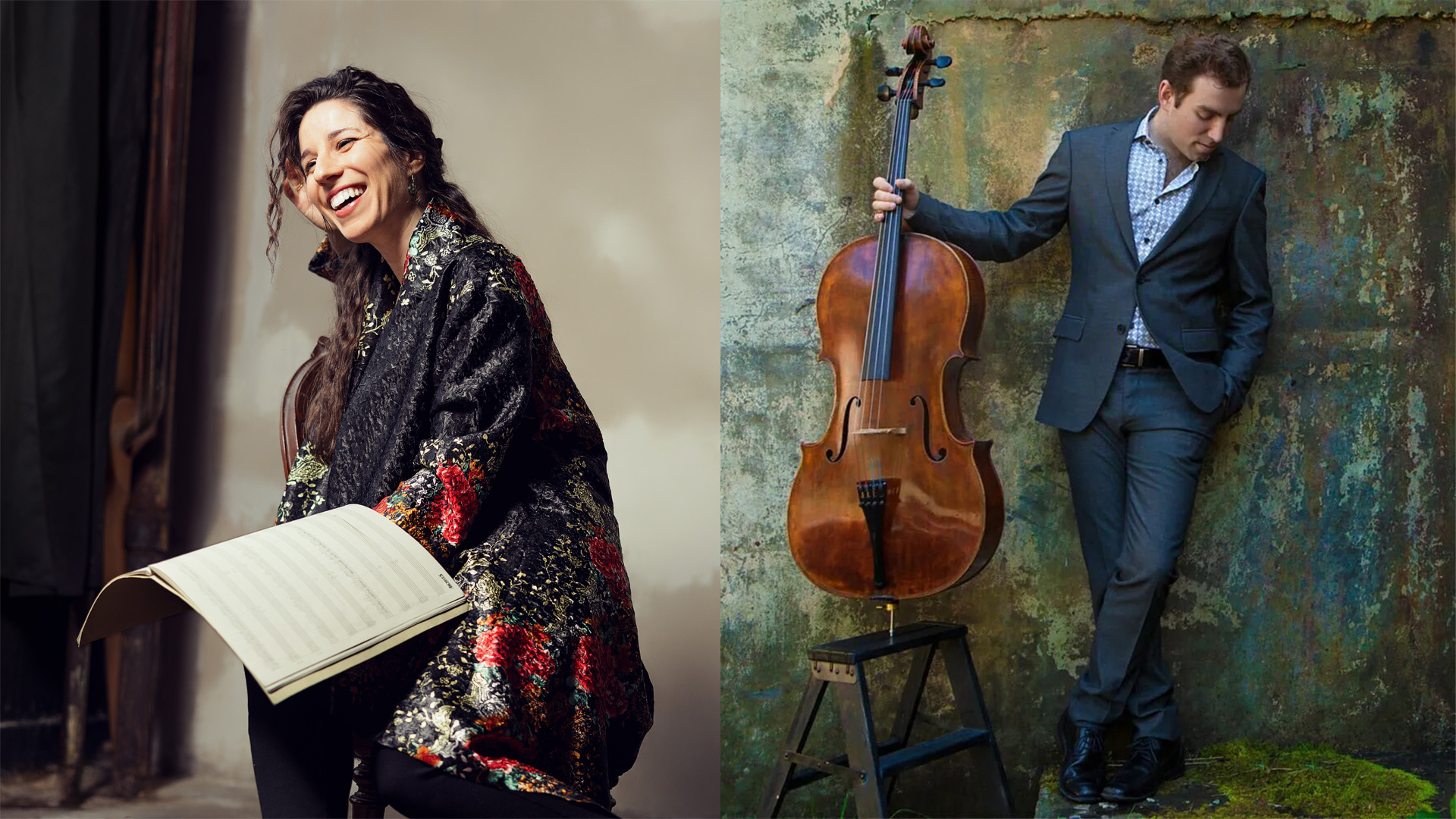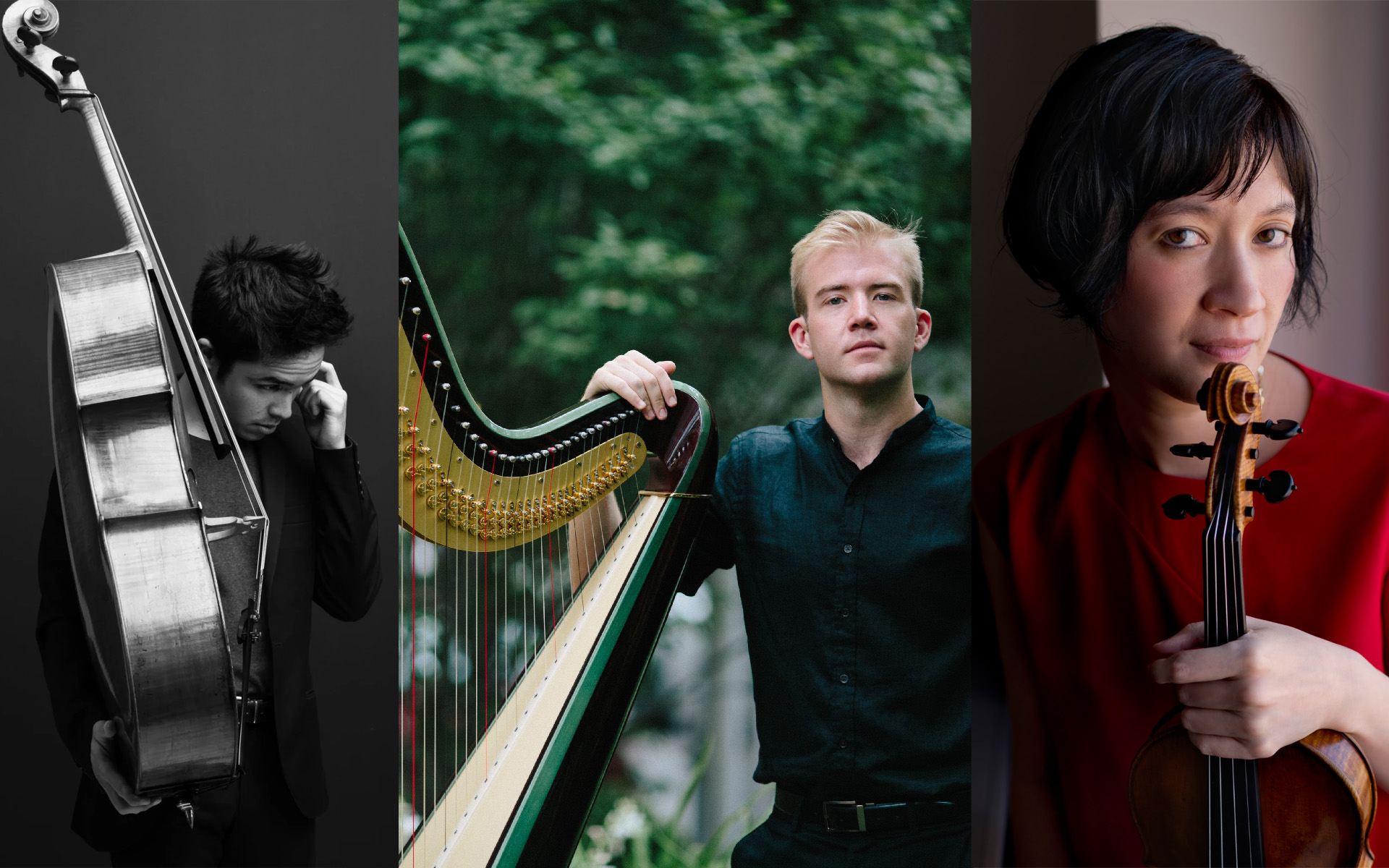
International Contemporary Ensemble / Jessie Cox
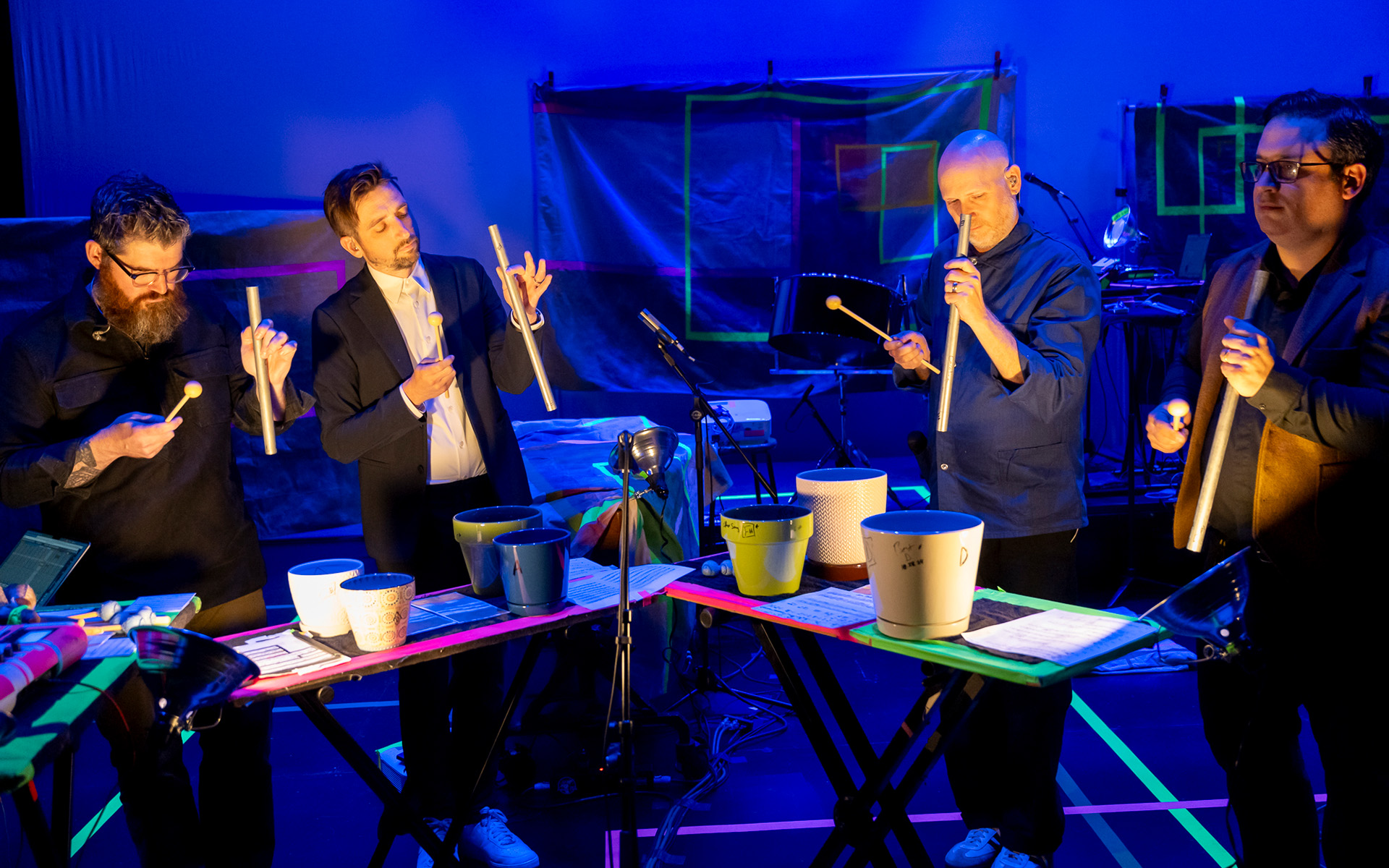
International Contemporary Ensemble is “America’s foremost new-music group” — The New Yorker
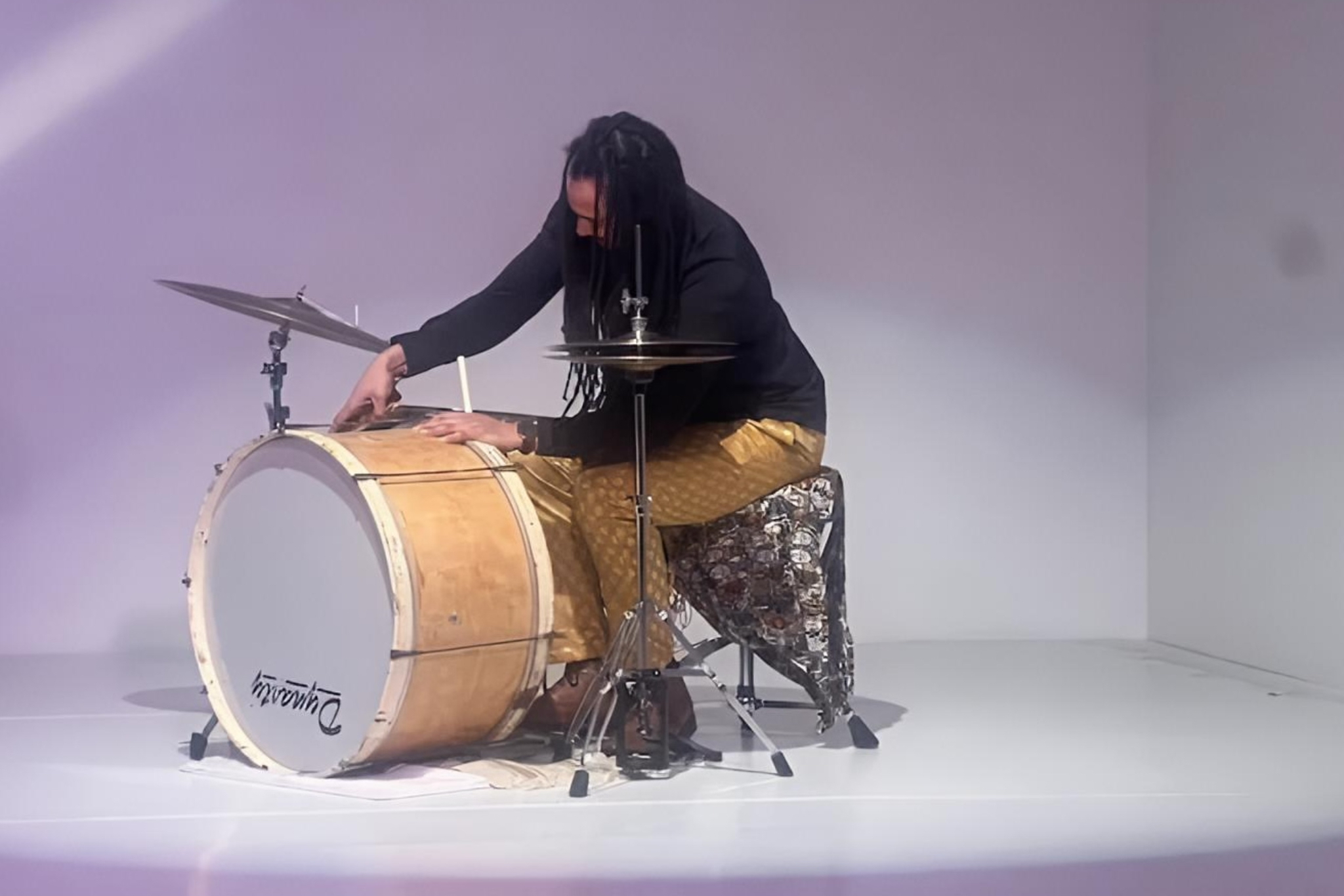
Jessie Cox makes “some of the most experimental music not just of the day, but of the season” — LA Times
Listen to the Cry of the World, the inaugural project of the Cheswatyr Incubator (a collaboration between PS21, International Contemporary Ensemble, and the Cheswatyr Foundation), is a full-length piece exploring the idea of ecology and Blackness by composer, drummer, scholar, and Harvard professor Jessie Cox. Developed in close collaboration with Ensemble musicians, the experimental piece has undergone two workshops at the Ensemble’s headquarters in Downtown Brooklyn, which will be followed by a week-long residency at PS21 in July, culminating in this world premiere performance.
The piece features a custom-built, live acoustic installation—connecting the PS21 Pavilion Theater to the woods behind it—in which voice, instruments, trees, strings, and electronics interact as one resonant system. Installed strings link instruments and objects, creating acoustic vibration and feedback systems that are both audible and visible. Trees become part of this sounding architecture—not as stage images, but as resonant bodies within the musical design. Sounds migrate, distort, and decay across connected materials.
Taking inspiration and texts from Martinician philosopher Édouard Glissant, the work centers the question of relations between people, environment, technologies, and histories to propose a poetic intervention in our world’s crises.
The evening-length work for voice and large ensemble will be performed by 10 musicians of International Contemporary Ensemble, in the round, surrounded by the audience.
The piece is conducted by Vimbayi Kaziboni, the widely-sought after Zimbabwean-born conductor of “great intensity, without distancing, maneuvering, without indifference” (Neue Muzikzeitung – Leipzig) who has led performances at Carnegie Hall, Berlin Philharmonie, Philharmonie de Paris, Royal Festival Hall & Queen Elizabeth Hall at Southbank Centre, Lincoln Center, and beyond.
6:30 pm: Discussion – Jessie Cox (composer), Fay Victor (vocalist), Joshua Rubin (clarinetist), Matthew Gold (moderator)
7:30 – 8:00 pm: Installation Interaction
8:00 – 9:00 pm: World premiere of Listen to the Cry of the World
Run time: 60 minutes, no intermission
The Cheswatyr Incubator is a multi-year partnership between the Cheswatyr Foundation, International Contemporary Ensemble, and PS21 to support emerging composers through long-term incubation of new work and multi-day creative processes. The inaugural year sees composer Jessie Cox developing a full-length piece centered around the idea of ecology and blackness. Developed in close collaboration with Ensemble musicians, the experimental piece has undergone two workshops at the Ensemble’s headquarters in Downtown Brooklyn, followed by a week-long residency at PS21 in July and culminating in a work-in-progress performance. Cox’s approach highlights his thinking through the ways that experimental musicians use technologies to convey relationships and working with ecologies, incorporating PS21’s natural landscape.
Listen to the Cry of the World is an evening-length work for voice and large ensemble, commissioned by and developed with the International Contemporary Ensemble. The piece builds a live acoustic environment in which voice, instruments, trees, strings, and electronics interact as one resonant system. I engage questions of how to move beyond hegemonizing technologies embedded in histories of colonial extraction towards alternative and speculative technologies of survival as found, for example, in the Caribbean. Taking inspiration and texts from Martinician philosopher Édouard Glissant, the work centers the question of relations between people, environment, technologies, and histories to propose a poetic intervention in our world’s crises.
A central feature of the piece is a network of resonant connections stretched across the performance space. Strings link instruments and objects so that vibration can be transferred, amplified, and destabilized across the ensemble, creating acoustic feedback systems that are both audible and visible. Trees become part of this sounding architecture, not as stage images, but as resonant bodies within the musical design. This allows the form of the piece to emerge through transmission, interference, and accumulation. Sounds migrate, distort, and decay across connected materials. In the process, what is materially present becomes transformed.
Rather than using instruments as neutral tools, I treat them as sounding bodies with material histories. I draw on the histories of instruments in the Caribbean, such as the box bass, the steel drum, tambrin, and tamboo bamboo. These instruments present systemic transformations that change both environment as well as human systems. My newly developed “Cyborg-Clarinet,” a clarinet modified with a 3D-printed adapter housing a miniature loudspeaker, for example, extends this approach to technology. The Cyborg-Clarinet allows embedded electronic sound and acoustic resonance to inhabit the same body, bringing attention to the clarinet’s dependence on African blackwood and the extractive histories bound to that material. I also modify instruments with cotton, rubber, plastic, and twine, using these materials to produce unstable resonances and shifting timbres. These materials, which are entangled with histories of extraction and pollution, are present in the musicking and their refusal and fugitive potential becomes recognizable through their sounding. Behind exploitation and attempts to structural control over life, we find Blackness as a refusal and refiguring, presenting new ways of being and relating. In the end, listening in concert with these objects as voices proposes radically novel approaches to the challenges of our time.
Described as “America’s foremost new-music group” (The New Yorker), International Contemporary Ensemble is dedicated to supporting living composers through commissioning, developing, and premiering new works. Now in its third decade, the Ensemble has premiered over 1,000 works and plays a pivotal role in launching and shaping the careers of today’s most influential composers. Through its bold programming and innovative curation, the Ensemble continues to redefine the possibilities of contemporary music.
The Ensemble has brought its vision of a mosaic musical ecosystem to festivals and venues all over the world including Carnegie Hall, Maerzmusik/Berliner Festspiele, Warsaw Autumn, Miller Theatre Composer Portraits, Museum of Modern Art New York, Centre for Contemporary Arts Glasgow, HEAR NOW Los Angeles, Darmstadt International Summer Courses for New Music, NYU Skirball, Pioneer Works, Oberlin College, House of World Cultures, TIME:SPANS Festival, Big Ears Festival, Adelaide Festival, the Dutch National Opera, Cité de la Musique (Paris), Haus der Kulturen der Welt (Berlin), Walt Disney Concert Hall, Metropolitan Museum of Art, and Japan Society.
Through trailblazing initiatives such as the Call for ____ Commission Program and Ensemble Evolution (in partnership with The New School’s College of Performing Arts), the Ensemble has had a major impact on the contemporary performance ecosystem in New York City, nationally, and internationally, by supporting the creativity of their composer-collaborators, as well as presenting workshops and performances for hundreds of student composers. Many of the Ensemble’s composer-collaborators have developed highly influential careers, such as Du Yun, who won the 2017 Pulitzer Prize for the opera Angel’s Bone, which the Ensemble developed and premiered, and MacArthur Fellows Tyshawn Sorey and Courtney Bryan.
Jessie Cox is Assistant Professor of Music at Harvard University. A composer, drummer, and scholar, his work engages experimental music as a site of critical inquiry, bringing together music studies, Black studies, and critical theory. His first monograph, Sounds of Black Switzerland: Blackness, Music, and Unthought Voices (Duke UP, 2025), explores how experimental musical practices and thinking with Blackness open alternative ways of worlding.
Cox’s compositional practice spans avant-garde classical music, experimental jazz, and sound art. His music is often described as speculative or Afrofuturist in orientation, engaging questions of time, space, and collective imagination. It has been noted for its distinctive textures, structural instability, and expressive intensity; writing in The New Yorker, Alex Ross has described Cox’s work as an example of “dynamic pointillism,” marked by “breathy instrumental noises, mournfully wailing glissandi, and climactic stampedes of frantic figuration.” He has worked with ensembles and institutions including the Sun Ra Arkestra, the Los Angeles Philharmonic, and Klangforum Wien. He has received a Fromm Foundation commission, a Civitella Ranieri Fellowship, and the ASCAP Fred Ho Award.
Alongside his compositional work, Cox’s scholarly writing advances practice-based approaches to music as a form of research. His writing appears in Composing While Black, liquid blackness, Critical Studies in Improvisation, Sound American, American Music Review, Musik-Diskurse nach 1970, and others.
Conductor, Vimbayi Kaziboni
Violin, Modney
Viola, Carrie Frey
Cello, Lester St. Louis
Double Bass, Randy Zigler
Bass Clarinet, Joshua Rubin
Horn, Nicolee Kuester
Voice, Fay Victor
Percussion 1, Levy Lorenzo
Percussion 2, Clara Warnaar
Percussion 3, Dennis Sullivan
Lighting Designer, Nicholas Houfek
Technical Director & Audio Engineer, Daniel Rodier
The Cheswatyr Incubator is made possible through generous support by The Cheswatyr Foundation. Additional support provided by Swiss Arts Council Pro Helvetia. The International Contemporary Ensemble’s performances and commissioning activities during the 2025-26 concert season are made possible by the generous support of our board of directors, many individuals, as well as the Mellon Foundation, Howard Gilman Foundation, Fromm Music Foundation, Jerome Foundation, Fan Fox and Leslie R. Samuels Foundation, John D. and Catherine T. MacArthur Foundation, Aaron Copland Fund for Music Inc., Mid Atlantic Arts Foundation, The Arlene and Larry Dunn Fund for Afrodiasporic Music, Amphion Foundation, The Cheswatyr Foundation, The Gladys Krieble Delmas Foundation, Alice M. Ditson Fund of Columbia University, BMI Foundation, New York State Council for the Arts with the support of Governor Kathy Hochul and New York State Legislature. Yamaha Artist Services New York is the exclusive piano provider for the International Contemporary Ensemble.